Dr Muthu Rajaram
Consultant Gastroenterologist
I see patients from Shropshire, Staffordshire, Wales and its adjoining areas.
The NHS side of my practice is based at Leighton Hospital whereas my private practice in Shrewsbury. I see patients from adjoining parts of Shropshire, Cheshire and Staffordshire.
I am accredited with all major private health insurance companies including BUPA, Axa, Aviva, Vitality and WPA. Once an appointment has been made, pre-authorisation will often be provided by your insurers for the initial appointment.
Biography
Dr Muthu Rajaram qualified in 1999 and after gaining further experience in the Midlands and Devonshire, he was appointed as a Consultant Gastroenterologist in 2020. He has an interest in therapeutic endoscopy. He did his gastroenterology training in the Midlands and Southwest and undertook an advanced endoscopy fellowship in Nottingham. He was appointed as a nationally accredited NHS bowel cancer screening colonoscopist in 2022.
He is part of the Hepatobiliary Pancreatic multi-disciplinary team and lead the Hepato-Biliary Endoscopy services at Leighton Hospital. After his appointment at Leighton Hospital, he has introduced advanced endoscopic procedures. Dr Rajaram sees patients with general gastroenterological issues and patients with liver diseases.
He serves as a consultant at the highly regarded Cheshire Gut Clinic.

Conditions treated
Heartburn
Heartburn is a burning pain in your chest, just behind your breastbone. The pain is often worse after eating, in the evening, or when lying down or bending over.
Occasional heartburn is common and no cause for alarm. Most people can manage the discomfort of heartburn on their own with lifestyle changes and nonprescription medications.
Heartburn that is more frequent or interferes with your daily routine may be a symptom of a more serious condition that requires medical care.
Abdominal Pain
Abdominal pain has many causes, some more serious than others. What feels like a stomachache may be coming from another organ in your abdomen, or from outside of your digestive system. Always seek medical care if your abdominal pain is unexplained, persistent or severe.
Conspitation
Constipation is a condition in which a person has uncomfortable or infrequent bowel movements. Generally, a person is considered to be constipated when bowel movements result in passage of small amounts of hard, dry stool, usually fewer than three times a week. However, normal stool elimination may consist of having a bowel movement three times a day or three times a week; it depends on the person.
Coeliac Disease
Two people can have the same symptoms after eating gluten — bloating, stomach pain, diarrhea — but have two different gastrointestinal (GI) diseases: Coeliac disease and gluten intolerance, or non-celiac gluten sensitivity (NCGS).
Coeliac disease is an autoimmune disorder, whereas gluten intolerance is a sensitivity. NCGS does not typically have a full negative impact on overall health like celiac disease can.”
Crohn's Disease and Ulcerative Colitis
Crohn’s disease and ulcerative colitis are two types of Inflammatory bowel disease (IBD). IBD refers to diseases that cause chronic inflammation in your gastrointestinal tract. Its symptoms may come on suddenly (flares) and cause abdominal pain and diarrhoea, among other issues. But IBD can affect more than your gut — it can affect your overall physical health, emotional well-being and even your mental health.
Inflammatory bowel disease is a lifelong illness for which there’s no cure. This may sound grim. But there are treatments that manage IBD symptoms, and steps you can take to keep IBD from disrupting your life.
Diarrhoea
Diarrhoea is a loose, watery and possibly more-frequent passage of stool. It is a common problem. Sometimes, it is the only symptom of a condition. At other times, it may be associated with other symptoms, such as nausea, vomiting, abdominal pain or weight loss.
In most cases, diarrhoea is usually short-lived, lasting no more than a few days. But when diarrhoea lasts beyond a few days, it is usually a sign to another problem — such as medicine side effects, changes in diet, irritable bowel syndrome (IBS), or a more serious disorder, including ongoing infection, coeliac disease or inflammatory bowel disease (IBD).
Diverticular Disease
Diverticular disease and diverticulitis are related digestive conditions that affect the large bowel.
In diverticular disease, small bulges or pockets (diverticula) develop in the lining of the intestine. Diverticulitis is when these pockets become inflamed or infected.
The majority of people with diverticula will not have any symptoms; this is known as diverticulosis. However, symptoms of diverticulitis tend to be more serious.
Liver Disease
There are many types of liver disease. Some of the most common types are treatable with diet and lifestyle changes, while others may require lifelong medication to manage. If you begin treatment early enough, you can often prevent permanent damage. But you may not have symptoms in the early stages. Late-stage liver disease is more complicated to treat.
Colonic polyps and bowel cancer
A colonic polyp is a small clump of cells that forms on the lining of the colon. Most colon polyps are harmless. But over time, some colon polyps can develop into colon cancer. Colon cancer can be fatal when found in its later stages.
Anyone can develop colonic polyps. You’re at higher risk if you are 50 or older, are overweight or are a smoker. You are also at higher risk if you have a personal or family history of colon polyps or colon cancer.
Colonic polyps don’t usually cause symptoms. It is important to have regular screening tests because colonic polyps found in the early stages can usually be removed safely and completely. The best prevention for colon cancer is regular screening for and removal of polyps.

Procedures
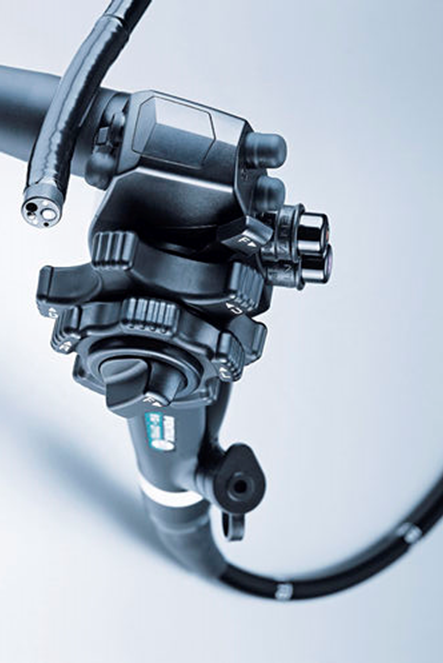
Following your consultation you may have been informed that you require a procedure called a gastroscopy .
This is when a thin flexible tube called an endoscope is used to view the oesophagus, stomach and duodenum. Details of any preparation required will be given to you prior your examination. The procedure is minimally invasive, relatively painless and at worst only mildly uncomfortable.
The gastroscopy will be performed in purpose built theatres using technically advanced, state of the art equipment. Your consultant views images produced via video linked screens allowing excellent vision of each area facilitating early, accurate diagnosis of each symptom. You many require sedation.
Following your gastroscopy, you will be taken to recovery to be expertly looked after until you are fully recovered. You will be offered light refreshments prior to going safely home.
This is an investigation carried out to identify any abnormality of the lower end of the large bowel.
It causes only very mild discomfort and can be done without sedation, depending on the patient’s wishes. Preparation is not always required for flexible sigmoidoscopy.
A thin, flexible tube is used, which has a light at the end. This enables the specialist to get a clear view of the lining of the bowel and detect anything unusual. You can then be offered accurate, expert advise regarding your condition to further investigate or manage symptoms as required.
Your consultant may have suggested that you require a colonoscopy due to the symptoms that you are experiencing. You will be given details of the preparation required well in advance prior to your procedure.
A colonoscopy involves using a thin, flexible tube to view the large bowel and colon. You will be given sedation to ensure the examination is pain free and that you remain comfortable throughout the examination.
The patient’s privacy remains a priority at all times within our purpose built theatres. Accurate, extensive images are viewed on state of the art, technically advanced equipment, allowing an early, accurate diagnosis.
Occasionally, not all abnormalities can be detected, and other investigations may be required. This will be fully discussed with you by your consultant before discharge.
Following your colonoscopy you will be looked after in your room until you have fully recovered. Light refreshments are provided and when you are ready you will be allowed home accompanied by a responsible adult.
Ultrasound is like ordinary sound except it has a frequency (or pitch) higher than human beings can hear. When sent into the body from a transducer resting on a patient’s skin, the sound is reflected off internal structures. The returning echoes are received by the transducer and converted by an electronic instrument into an image of the internal structures on a viewing screen. These continually changing images can be recorded on film, paper, videotape, or computer. In an abdominal examination, ultrasound produces images of the major organs, including the liver, gallbladder, bile ducts, pancreas, spleen, kidneys, and large blood vessels.
A CT (computerised tomography) scan, sometimes also called a CAT scan, takes pictures of the body and uses a computer to put them together. A CT scanner uses X-rays and is a painless procedure. A series of X-rays are taken of your body at slightly different angles, to produce very detailed pictures of the inside of your body. The pictures produced by CT scans provide your consultant with information to him them reach a diagnosis about a variety of conditions. The CT scanner is a large machine. The pictures are taken while you lie on a couch, which moves backwards and forwards through the hole of the machine that is shaped rather like a giant doughnut. The scan may need a contrast dye or substance that improves the picture of certain tissues or blood vessels. This material may be swallowed, given as an enema or injected into the blood stream, depending on the part of your body that is to be scanned.
An MRI (Magnetic Resonance Imaging) scan is a medical imaging technique used to create detailed images of the organs and tissues inside the body. It is a powerful diagnostic tool that provides detailed and precise images, aiding in the accurate diagnosis and treatment of various medical conditions.
Capsule Endoscopy allows your doctor to examine the lining of your gastrointestinal tract. This is mainly for the the small intestine and the colon. Not all patients will be suitable for this procedure.
A belt and recorder unit is placed around your waist. You will be asked to swallow the capsule with a glass of water. Once swallowed, the test has started and you can return home for the remainder of the test.
Once the recorder is returned, it is uploaded onto a computer and 8 hours of video footage will be read by the consultant. A report will be issued after the test has been completed.
- Measures the strength of the oesophageal muscles
- Determines how well the oesophageal sphincters open and close
- Measures the pressure and speed of muscle contractions
- Involves passing a thin tube through the nose and into the oesophagus
- Measures the amount of acid in the oesophagus over a 24-hour period
- Helps diagnose gastroesophageal reflux disease (GERD)
- Involves placing a tube in the oesophagus that’s connected to a data recorder
Small intestinal bacterial overgrowth (SIBO) occurs when there is an abnormal increase in the overall bacterial population in the small intestine — particularly types of bacteria not commonly found in that part of the digestive tract. This condition is sometimes called blind loop syndrome.
Small intestinal bacterial overgrowth (SIBO) commonly results when a circumstance — such as surgery or disease — slows the passage of food and waste products in the digestive tract, creating a breeding ground for bacteria. The excess bacteria often cause diarrhea and may cause weight loss and malnutrition.
Hydrogen and methane breath testing is a widely accepted means of identifying changes to the gut microbiome and is used to detect abnormal growth of bacteria in the small intestine, or small intestinal bacterial overgrowth (SIBO).
These simple carbohydrate intolerance breath tests can provide information on whether you have an intolerance to sugars such as lactose or fructose.
Lactose is a sugar found in milk and dairy products. If you are lactose intolerant, it means your body has difficulty in handling lactose and you may experience symptoms like diarrhoea, stomach pains and bloating.
Some people are unable to digest lactose because they do not produce enough of an enzyme (a substance which helps break down food) called lactase.
You may be referred for a test if you are experiencing symptoms including diarrhoea, nausea, bloating, gas and abdominal cramps as many of these symptoms can be attributed to digesting foods with certain sugars and carbohydrates. A lactose intolerance breath test can help to uncover malabsorption of lactose (the sugar in dairy), and a fructose intolerance test can identify malabsorption of fructose (fruit sugar).
Appointment
Referrals are made to us by your GP or by self referrals. The vast majority of GPs are familiar with us already and may direct you to our unit. However, if they are not familiar with the Cheshire Gut Clinic, you can suggest they consider us, should you wish to be referred to a specialist unit such as ours. Once your NHS or Private GP believes there may be a possibility of a stomach, bowel or liver problem, they may consider that it is more appropriate that you are seen by a gastroenterologist, and this is when the Cheshire Gut Clinic might be considered.
Please contact The Nuffield Shrewsbury Hospital on 01743 282500
or
email: secretaries.cheshiregutclinic@gmail.com
or
click here to book online: outpatient booking